Sunday, 13 December 2020

Jordan _ Saidyeh Secondary School

Jordan's Winter Customs and Traditions (part 3)


Winter Drinks 

Because of the cold weather in winter, people prefer to drink hot drinks because it increases the feeling of warmth and also because of its delicious taste and one of the most important traditional drinks in our country:

1- Arabic coffee (the most traditional drink of all times and all occasions)

2- Tea (many people prefer to add a certain taste (a little of it) to tea such as cardamom, mint and almirimih( Salvia officinalis)).

3- Yellow tea or herbal teasuch as thyme, chamomile, anise, cumin, mint, almirimih( Salvia officinalis), cinnamon and others.

4- Sahlab Drink(a drink made from milk, Corn Starch, sugar and decorated with cinnamon, walnuts and raisins).


   https://youtu.be/H4eFJQQVtFQ      https://youtu.be/7BmOYKvuLZ8                                                                                                                 


Another tradition. 

 One of the habits that people like in winter is to light a fire next to the house or in an area away from home, sitting around with family or friends and making tea or coffee and drinking them outside the house.


https://youtu.be/z_PMxH-YbY0

https://youtu.be/_hxudbxI9_o

Jordan _ Saidyeh Secondary School


 Jordan's Winter Customs and Traditions (part 2)


With the entry of winter, many Jordanian families tend to acquire a heating device that has good specifications and warms in the cold of the harsh winter, some use a heater powered by gas, Kerosene, diesel or electricity or firewood.

It is a fireplace made of metal often the shape of a rectangle or a square has a door of heat-resistant glass or metal, and through this door put firewood inside it and also has openings to ventilate and can close these openings or open them when needed.

The Firewood heater  has become a demand for many, even some families that build a new house allocate a place within the establishment of the house because this type of heater is characterized by the amount of heat emitted by it, making the place very warm even if this place is very wide.

It also features that it suits the economic situation of most people, the cost of lighting them compared to other types of heaters is the least, because they depend mainly on firewood and some are used to ignite them material called peat (which is the remnants of olive fruits and seeds that come out of the press after the olive age is formed and dried in a certain way so that it can be used as fuel for the heater)

Also can be used for cooking because of its shape and high temperature and the whole family can sit around this fireplace so there is a beautiful family atmosphere full of love and warmth.


                                         https://youtu.be/8Se9_rsrqIc  


Ziziros or Cicada: A Traditional Easter Game

What it is:

This is a funny game and both participants and onlookers laugh and have fun when they play or watch it.

When / Where it is played:

Ziziros  or Cicada is a traditional game in Cyprus which is usually played in villages around Cyprus on Easter Sunday and during Easter holidays. The game is usually played in a village square or the village church yard.


 Ziziros: Meaning         

The name of this game means “cicada” in Greek, which is an insect which makes a loud buzz.

Game Rules:

This game is usually played by a group of three to eight people. One of the players is “ziziros” and stands in the middle of the group with his/her back turned to the other players. Ziziros covers his/her eyes with the right hand and puts the left hand under the right arm with his/her fingers open. One of the other players hits ziziros on the right hand, either softly or harder. All the players start making a ZZZ sound like a cicada and wave their hands in a circle to confuse ziziros. Ziziros has to guess who hit him/her and if he/she is right, then the person who hit him/her takes his/her place. If ziziros does not guess correctly,


then he/she must continue until he/she does so. 


 Importance of the game:

Traditional Easter games in Cyprus have been inscribed since 2017 in the country’s intangible cultural heritage by the Cyprus National Commission for Unesco.  Ziziros, just like all other traditional Easter games, are part of the culture of our country.  They tell us about   the way in which people in the past used to have fun especially during Easter, an important Christian Feast and about people’s need to get together and celebrate major events and special religious moments. People used to and still get together with friends, relatives, neighbours, co villagers and socialize and have fun without expecting any material reward. Older generations pass on to younger generations their knowledge of traditions and customs, as well as values such as playing in a team, respecting the rules of a game and respecting the other players. Older people explain the rules of ziziros or of any other Easter game and they all play it together, exercising thus both their mind, wittiness, reflection and reactions and their body.   

Playing Ziziros at our school:


Jordan _ Saidyeh Secondary School


Jordan's Winter Customs and Traditions (part 1)


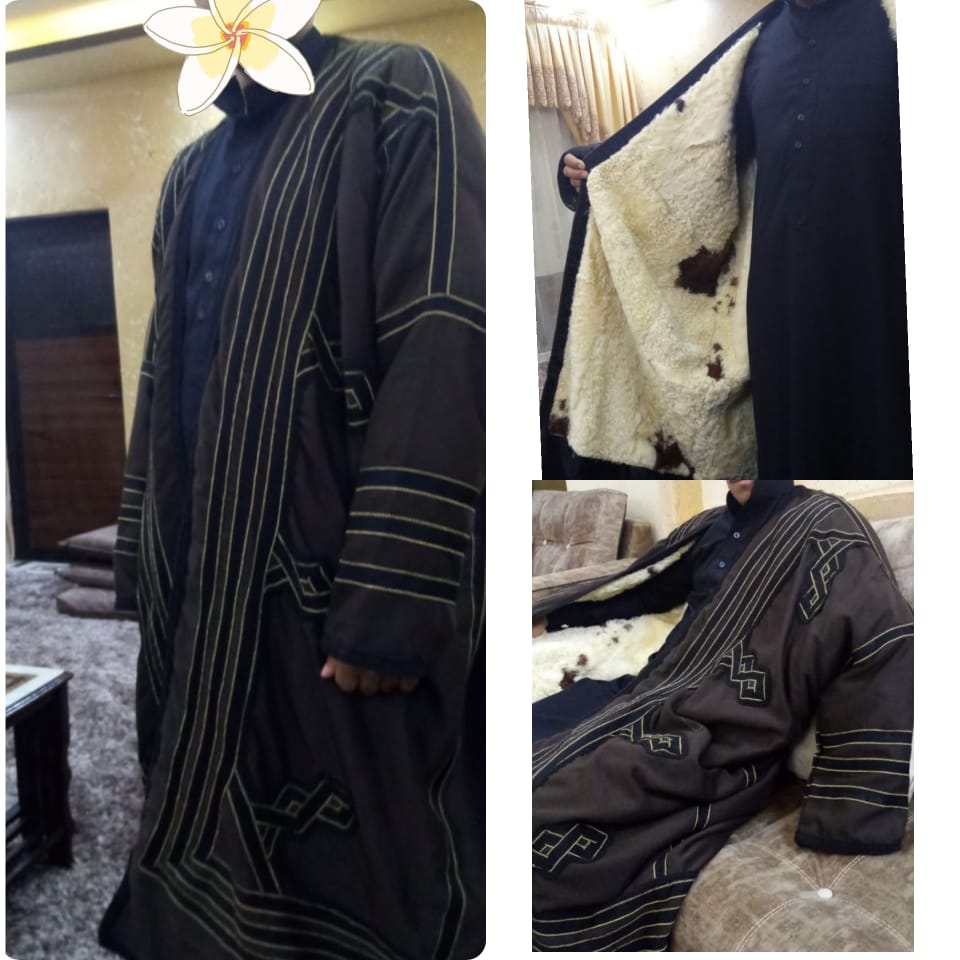
alfarwah (a kind of winter clothing resembling a coat)

Jordan's weather is very cold in winter, when it's winter time, people start looking for everything that makes them feel warm, and fur has always been a heritage choice for people in the past, especially on colder days.

The ancestors were holding (alfarwah) in the harsh cold to protect them from winter, and despite the variety of winter clothes and their special and modern specifications, (alfarwah) still maintains its place in the cold, and hardly any house is devoid of its existence because of its great importance and it is a popular heritage and was considered as an indicator of the richness of its own and the place of this person among the people.

It is a long cloak-like robe that coats the whole body, and consists of an inner layer and an outer layer, the outer layer made of heavy cloth or leather and the inner layer was made of natural sheep wool (It is one of the most expensive species, but the type made of natural wool has become rarely made) and nowadays the inner layer is made of synthetic fur.

With the entry of winter spread (alfarwah) on the roads and displayed in the markets, as well as you find them with street vendors, and offered for sale on social networking sites, each of which has a different type and price from the other, as the price ranges between precious and cheap according to the type of skin itself and cloth and wool, as the length (alfarwah) itself determines the price there long and there short.

In the past ( alfarwah) was dedicated to men only, but in recent years there have been designs suitable for women and children and made in different colors and designs to suit all tastes.

  .The term alfarwah is taken from the word fur in Arabic


  References

https://alghad.com/%D8%A7%D9%84%D9%81%D8%B1%D9%88%D8%A9-%D8%B1%D8%AF%D8%A7%D8%A1-%D8%B4%D8%AA%D9%88%D9%8A-%D8%AF%D8%A7%D9%81%D8%A6-%D9%8A%D8%B3%D8%AA%D9%87%D9%88%D9%8A-%D8%A7%D9%84/

https://www.addustour.com/m/articles/989100-%C2%AB%D9%81%D9%80%D8%B1%D9%88%D8%A9-%D8%A7%D9%84%D8%A7%D8%AC%D8%AF%D8%A7%D8%AF%C2%BB-%D9%84%D9%85%D9%88%D8%A7%D8%AC%D9%87%D8%A9-%D8%A8%D9%80%D9%80%D8%B1%D8%AF-%D8%A7%D9%84%D8%B4%D8%AA%D8%A7%D8%A1

Saturday, 12 December 2020

Srednja Škola Konjščina, Croatia


Prepared by Patrik M.


Štrajenje

(A traditional custom in Croatia for the birth of a child)


Štrajenje originally meant putting hay or leaves in animal stables so that they would not sleep on a cold floor, but on something warm. 

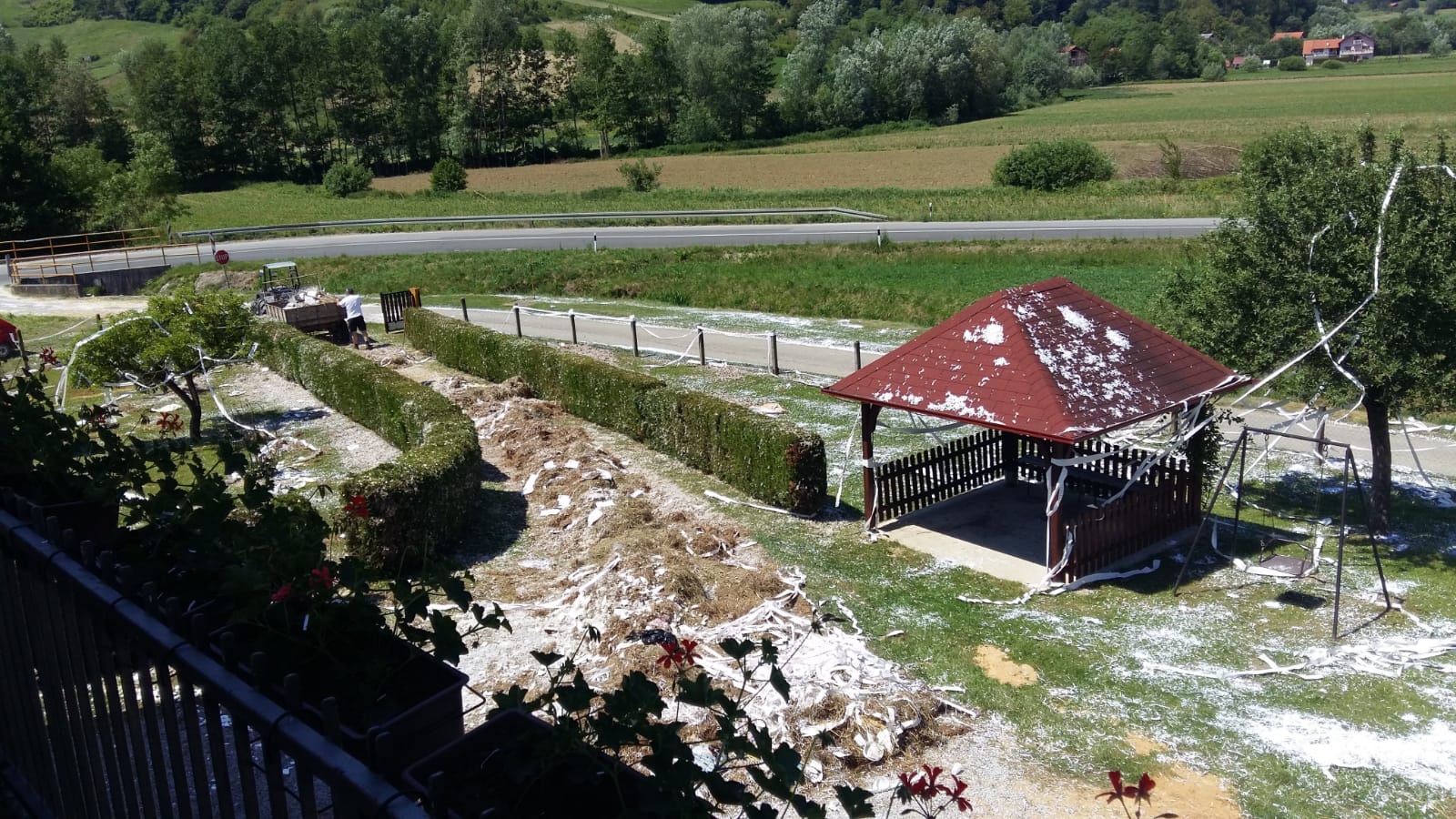
There is a story about how štrajenje that we know today (a traditional custom for the birth of a child) started. The story is about a man that did not want to accept his newborn child, so the villagers covered his house with hay, leaves, feathers and corn so he would feel embarrassed. 

In Zagorje County, a region of Croatia where we live, štrajenje is a tradition that takes place when a mom and the baby come home from the hospital. Then the neighbours, friends and relatives come and throw all kinds of trash in the yard, on the house and the road. Corn, hay, leaves and feathers were used before, but they are no longer used as much. Nowadays people use textile, paper rolls and paper strips more. People sometimes do all kinds of pranks, but more or less no harm is done as it used to be. 


photo: private album

Now štranjenje is a more positive tradition and when no one comes to štrajenje it is a shame. This is how a party is made, there are meals, drinks, cakes and music. The next day people gather to clean the yard and the house, but some trash stays on the roof and the branches for a long time and reminds people of the great party.

video: private album


Tuesday, 8 December 2020

St Nicholas Day in Slovakia

 St Nicholas Day in Slovakia 


It is celebrated each year on 6 December. Small kids enjoy it very much. They clean their shoes or boots and they put it by the window or next to the front door before they go to bed on 5 December. Nowadays it is popular to use socks, too. 


PATRIK: "We don´t clean shoes but we use socks so we don´t have to clean anything. I give my sock to the window and I wait until the next morning. When I get up there is a chocolate in my sock."

MARTINA: "Day before St. Nicholas I clean my shoes and then I give them in front of a window. Next day I will get some sweets, fruit or nuts from St. Nicholas. If I did not clean my shoes well I would get coal to my shoes. On St. Nicholas´ Day I usually spend time with my family."

MARIÁN: "In the evening on the 6th of December, my younger siblings and I put the boots near a window."

ADRIÁNA: "We don´t clean shoes because we aren´t little kids anymore. We celebrate  St. Nicholas day before with the family. We give sweets each others."


In the morning they find a lot of sweets and some fruit. 


JUSTÍNA: "In the morning I woke up there were thing I like in my boot".

LENKA: "This year I had some chocolate, fruit and nuts in my sock."

VERONIKA: "In the morning on the 6th of December, I find some sweets, healthy food or fruits and socks." 

NATÁLIA: "In the morning on the 6th of December we got our sweets. It’s usually In the bag on my bed or on the chair when I get up."

Sometimes St Nicholas vistis the families with his helpers - an angel and a devil. They ask children if they were good or bad. Kids usually sing for them or tell a short poem. Then they get the present.


BARBORA: "Every year someone from our family dresses up as Nicholas, an angel and a devils. They go out and visit our friends and family and hand out packages of sweets."


Monday, 7 December 2020

Afyonkarahisar Çay Gevher Nesibe Mtal


Diş Buğdayı

(Tooth wheat)


Photo by Münevver Gnmtal


“Tooth wheat” is a type of food celebration and symbolizes Turkish culture, love and charity, family, solidarity, friendship, sincerity and hospitality. Diş means tooth and wheat means buğday in Turkish. “Diş Buğdayı”  refers to a traditionally cooked wheat dish eaten on  this specific occasion. When a baby gets its first teeth, it is celebrated with relatives and friends by inviting them home. It is an occasion for joy and excitement for mothers. The mother of the baby prepares the meal with the help of her friends or relatives. The meal is served and eaten by all friends, relatives and neighbours together. Wheat also stands for fertility in the Turkish culture. It plays a very important role in the Turkish culture.


How to cook Tooth Wheat

Ingredients:

1 cup pealed wheat

1 cup sugar

4-5 cups water

1/2 tea cup chopped walnuts, pealed almonds, chickpeas


Recipe:

-Soak the wheat in cold water for 12-24 hours

-Drain the soaked wheat and put it in a pot. Add sugar and 4 cups of water and boil it for about 1.5 hours. Add more water if necessary.

- When the wheat is  soft and chewy, add walnuts, pealed almonds, chickpeas and more water if necessary and simmer for another 30 minutes.

- It should be soupy. Serve hot, cold or at room temp.


Saturday, 5 December 2020

Vesile Uslu/ Tes-iş Adapazarı Anatolian High School,Turkey

Prepared by Zeynep Ç,Sude Naz K,Sude Y,Emre Kenan U,Furkan Rıza P,Ali Ö.


Turkish coffee is one of the oldest methods of coffee preparation and brewing from the Ottoman Empire, which has an important place in Turkish culture. It has a unique identity and tradition with its unique taste, foam, smell, presentation style. It is the only type of coffee served with its grounds.

Turkish coffee is not only a beverage, but also a social work that brings together cultural gaps, social values and beliefs to socialize. The socialization role of Turkish coffee is based on the opening of the first coffeehouses in Istanbul, with their striking decorations. Coffeehouses in those times and still are places where people drink coffee, chat, share news, read books and socialize. Tradition itself is a symbol of hospitality, friendship, courtesy and fun. All of these are stated by the famous Turkish proverb "a cup of coffee has forty years' worth." This phrase shows how important coffee is in Turkish culture and how deeply it has penetrated Turkish culture.     


Turkish coffee is served with a glass of water.         
                                                                                                                 

Turkish delight traditionally accompanies the Turkish coffee and it is a perfect fit.


Researchers state that coffee spread all over the world from Abyssinia in the early 14th century, and the place of origin is the Kaffa region in South Abyssinia, whose etymology is similar to coffee.The father of Grand Vizier Özdemiroğlu Osman Pasha, one of the Mamluk Circassians, the Ottoman governor of Yemen Özdemir Pasha, brought the coffee he admired to Istanbul. With the new method of preparation, coffee was cooked in jugs and pots and became Turkish coffee. Starting from Tahtakale, the coffeehouses spread throughout the city, making it popular among the people.The beverage, which was previously obtained by boiling coffee fruit in the Arabian Peninsula, has attained its unique taste with this brand new method of preparation and cooking. Europe that met coffee with the Turks; Turkish Coffee, which has been prepared and consumed by this method as Turkish coffee for many years, is blended from high-quality Arabian coffee beans from Brazil and Central America, and preferably roasted slowly on charcoal fire, it is very finely ground. 


In a short time, thanks to the merchants and travelers who came to Istanbul and the Ottoman ambassadors, the taste and fame of Turkish Coffee spread first to Europe and then to the whole world.In 2013, Turkish coffee culture and tradition took its place in UNESCO's Intangible Cultural Heritage list.


The actual preparation of coffee requires many and very detailed steps and skills. First, freshly roasted quality coffee beans(optionally) are ground in a mortar or grinder until they become powder. Optionally, coffee, cold water and sugar are added to the pot. The coffee is placed on the stove and cooked so that foam is formed on the surface. Finally, it is served with a glass of water and Turkish delight. Achieving a good taste requires certain skills, such as the way the coffee is roasted and the degree of it. It is very important to roast all the coffee beans evenly and wait a while. As a means of entertainment, intelligible shapes inside the coffee cup are interpreted according to fortune telling 'rules'. It has been a traditional element of Religious Holidays and "Girl asking for marriage" ceremonies.


During the Ottoman period, when the guests came, the host immediately offered a coffee and put a glass of water next to it. If the guest drinks the water before the coffee, his stomach will come to hunger, the table will be set immediately, and this tradition continues today.


Like the tea-time tradition in the British, coffee has a time in Turkish society. It is usually drunk between morning and afternoon meals. The word "breakfast", which means the first meal of the day in Turkish ,means something eaten before coffee. 


The sweetest member of Turkish cuisine, the best gift to give, the best companion with coffee, a nostalgia from childhood, a reason to love holidays; yes, you are right! We are talking about Turkish lokum. Here you are the facts you should know about lokum which dates back hundreds of years and is an important part of the Ottoman cuisine.

The name Lokum is derived from the Arabic word "Rahat-ul hulküm". This word means "relieves throat". Approximately 600 years since is manufactured in Turkey and within our traditional desserts. Although it first appeared in the 15th century, its entry into the Ottoman palaces took place in the 17th century. The reason why it is a soft dessert is the wishes of the sultans, especially Abdulhamit I. As a matter of fact, the soft delight prepared by a dessert master named Muhittin Hacı Bekir upon the request of Abdulhamit I, using refined sugar instead of molasses, became the first example of Turkish delight today. The same dessert master introduced Turkish delight to Europe in the 18th century.

Turkish delight is an exquisite dessert known, recognized, and enjoyed in almost every country in the world. It is even known as “Turkish Delight” in most countries of the world (especially in North America). The Turkish delight is called "Rahat" in Bosnia and Romania, "Delicia Turca" in Brazil, and "Loukoumi" in Greece. The origin of the jelly, which is frequently used in western cuisines, is based on Turkish delight. It is served with Turkish coffee in almost all Balkan countries.


Lokum is made with citric acid, sugar, starch, food color and aroma. Sugar is boiled in water until it is fully dissolved. The citric acid and starch are left to dissolve in separate cups. Then citric acid and starch are mixed with sugar water. It is boiled for a while. The mixture is checked with a spoon whether it is in a sticky consistency, and it is kept in starchy cups for 20 hours. As a final step, it is shaped on rigid floor and packaged.


Tuesday, 1 December 2020

Çay Gevher Nesibe Mesleki ve Teknik Anadolu Lisesi

We Love Tea


Photo by: Ömer Gnmtal

Turkey’s love of tea is strong! We admires this drink :)


 Tea is  a part of  a cold winter day,a hot summer day, a visit to relatives or friends. It is a way to relax and a typical Turkish breakfast starts with a nice glass of tea.  It can be served with some fresh pastries and cookies. It’s drunk by everybody. We cannot think of a day without tea.


Photo by: Münevver Gnmtal

Traditional Turkish tea is black. Ottoman Sultan Abdülhamid II loved tea, but Sultan Mehmed V was addicted to it.   The tea seeds were brought from Japan in 1878 and they were planted in Bursa; but the Black Sea region was more suitable to grow this plant, the first tea seeds were planted in Batum in 1918.  A law regarding tea was introduced in 1924 and the seeds were planted in Rize. The  first tea factory was established in the same city in 1947 .

Photo by: Emine Gnmtal


How to Make Good Turkish Tea???


There are some important steps to prepare and enjoy a good tea.
First of all tea must be poured in a small and transparent glass and it should be hot to burn the lip a little bit. 

Ingredients:
1-Tea
2- Water
3-Pots

Recipe
Add the tea to the top part, and put water to boil in the bottom part of the teapot. When the water boils, add some to the top pot, stop the fire and wait 10 to 15 minutes before serving. Enjoy it!


                                                                                                                         Photo by: Münevver Gnmtal


                                                             by Büşra GNMTAL